
Community
Jasper County man killed in single-vehicle crash: sheriff
By Jared Lawson
Advertisement · Why this ad?
Jared Lawson, a graduate of the University of Alabama, has over five years of experience in community reporting, previously working for a neighborhood news site in Birmingham. He is dedicated to uncovering stories that connect and uplift the residents of Macon.
More from Jared →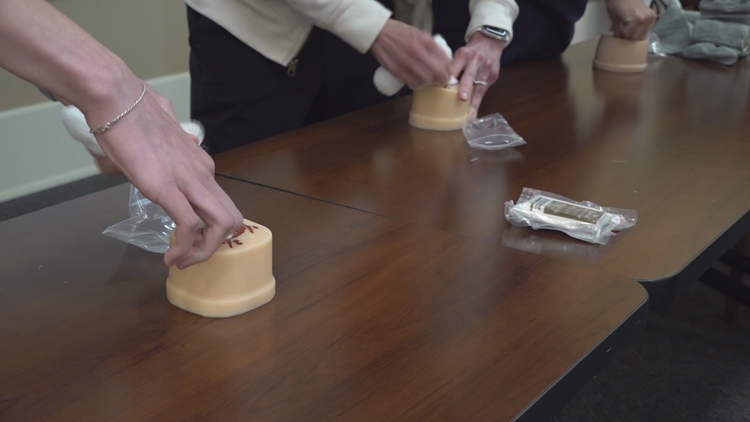
In a world where emergencies can strike at any moment, a group of dedicated individuals in Houston County is equipping residents with life-saving skills. Picture this: a bustling community center filled with eager participants, all eyes focused on a skilled instructor demonstrating how to apply direct pressure to a bleeding wound. This scene is more than just a training session; it's a testament to the resilience and commitment of our community to look out for one another. The initiative, known as 'Stop the Bleed', aims to teach essential techniques that could save lives during emergencies, such as gunshot wounds or severe injuries.
Launched in response to the increasing number of traumatic injuries, the Stop the Bleed program is a community-driven effort to empower citizens with the knowledge and skills necessary to act swiftly and effectively in emergencies. The Houston County program specifically tailors its training to local needs, emphasizing the importance of immediate action in critical situations. During the recent training session, participants learned how to use their hands, dressings, and even improvised materials to control bleeding.
The course, which is offered free of charge, is designed to be accessible to everyone. Instructors emphasize that these skills are not just for medical professionals; they are vital for anyone who might find themselves in a position to help a friend, family member, or even a stranger. The program is a reflection of the community's commitment to safety and preparedness.
The response from the community has been overwhelmingly positive. Many participants expressed gratitude for the opportunity to learn such critical skills. “Everyone needs to know this,” said one enthusiastic attendee, underscoring the urgency and importance of the training. It is a sentiment echoed by many who understand that emergencies can happen anywhere, at any time.
The program has attracted a diverse group of participants, ranging from young adults to senior citizens, all united by a common goal: to be prepared. Local resident Maria Gonzalez, a mother of three, shared her motivation for attending the training. “As a parent, I want to ensure that I can protect my kids in any situation. Learning these skills gives me peace of mind,” she explained.
The impact of the program extends beyond just the training sessions. Participants are leaving with a renewed sense of empowerment and responsibility. “I feel more confident now,” said another participant, who had previously felt helpless in emergency situations. This newfound confidence is crucial in moments where every second counts, and lives are on the line.
Local officials have also praised the initiative, recognizing its potential to save lives. “This program is a game-changer for our community,” stated a Houston County representative. “By teaching people how to respond effectively to emergencies, we’re fostering a culture of preparedness that can make a real difference.”
In addition to local government support, the program has garnered attention from various community organizations. The Houston County Health Department has partnered with the initiative to promote health literacy and emergency preparedness. “We believe that knowledge is power, and through programs like Stop the Bleed, we can empower our community to take action,” said Dr. Emily Carter, a public health official.
As the training sessions continue, stories of real-life applications of these skills are emerging. Participants have already begun to share how they’ve used what they learned in various situations, from minor injuries at home to more serious incidents in public places. These testimonials highlight the program's effectiveness and the importance of spreading the word about such valuable training.
One participant recounted a situation where a friend suffered a severe cut while camping. Thanks to the skills learned in the Stop the Bleed program, they were able to apply direct pressure and stabilize the injury until professional help arrived. This real-world application not only saved their friend’s life but also reinforced the importance of community training.
Another participant, James Lee, shared his experience during a local sports event. “I witnessed a player take a hard fall and injure his leg. I immediately remembered the techniques from the training, and I was able to assist until paramedics arrived. It felt good to know I could help,” he said. His story serves as a reminder of how quickly skills learned in training can translate to real-life scenarios.
For those interested in participating in future sessions, Houston County offers multiple opportunities throughout the year. Interested individuals can visit the Houston County website for more information on upcoming training dates and locations. In addition to the Stop the Bleed program, the county also provides various health and safety courses designed to equip residents with essential skills.
Moreover, local organizations and nonprofits are encouraged to partner with the Stop the Bleed initiative to host training sessions. This collaborative approach not only broadens the reach of the program but also strengthens community ties as residents come together to learn and grow.
Local businesses have also expressed interest in supporting the program. Several have offered to sponsor training sessions, providing materials and refreshments for participants. This kind of community involvement is vital for the sustainability of the initiative and demonstrates a shared commitment to safety.
Looking forward, the Stop the Bleed program aims to expand its outreach even further. Plans are in place to introduce training in schools, workplaces, and community centers across Macon and Houston County. By targeting these key areas, the initiative hopes to instill a culture of preparedness in the next generation.
As the program continues to evolve, it remains committed to its core mission: to ensure that every citizen has the knowledge and skills to respond effectively in emergencies. With the support of local leaders, residents, and organizations, the future looks bright for the Stop the Bleed initiative.
In conclusion, the Stop the Bleed program is more than just a training course; it is a movement towards a safer, more prepared community. By empowering individuals with life-saving skills, Houston County is fostering a culture of resilience and commitment that reflects the best of our community values. Together, we can ensure that everyone is equipped to handle emergencies when they arise. This initiative not only saves lives but also strengthens the bonds of community, reminding us all that we are in this together.
By Jared Lawson

By Margaret

By Rebecca Nash

By Margaret